I've never spent more than $5 for a pair of pants. My parents have bought me a few pairs for birthdays that probably hit $20, but in general, there wasn't much point in spending that much - what I didn't outgrow, I usually outlived.
I wear through clothes like a diarrhetic porcupine through a roll of TP. Some might apply the verb "trash" to my clothes usage, and it wouldn't be a big stretch. I've been aware of this for a while, so when I shop thrift stores I always look for the most rugged, durable-looking jeans in my size range... but they still wear out! And its not like I'm usually even doing anything crazy like sliding down rough granite or wrestling wolverines. The last pair of jeans I broke tore on a beach! The one before? Swing dancing!
Anyways, I'm in the process of sorting through all my personal belonging in preparation for my move to Florida, and I've come across a dilemma. Yesterday I sorted and packed all my "stuff", today comes my wardrobe. Fortunately, I've been planning for a transient early-adulthood lifestyle for a while now, so I don't have too much to work through in either category. I've realized, however, that I need to make some adjustments to my selection of trousers. The internship description for the farm I'll be working at starting in July recommends bringing "lightweight work clothes," "modest shorts," khakis for giving tours and some "nice clothes" for attending churches or conferences. As most of my pants currently are of the $5 don't-quite-fit-cause-I-bought-them-at-a-thrift-store variety, and none of them could be considered "lightweight" (important in FL's humid summers), its time for some exchanges. I can think of several options:
1. Keep the pants I have that are comfy or in good shape, and augment them with further thrift store purchases as these wear out. (We'll call this the 20x$5 option)
2. Invest in several pairs of decent pants that won't last much longer than thrift store pants, but at least will fit well and be of a lightweight material. (5x$20)
3. Research heavily and choose just one or two "ideal" pairs of pants, ones that are convertible, ultra-rugged, fit well, dry quickly, and look good. (something along the lines of this) (1x$100)
The advantage of options 1 and 2 is that I have a certain degree of flexibility in choosing a pair of pants in the morning. On the other hand, with option 3 some degree of flexibility is built in, and I have 4-96 less pairs of pants to shop for and cart around. There is a certain risk you run by putting all your money in one pot though, so perhaps option 2 is a good compromise.
In general, I prefer 1 of something that does the job well to 3 of something that do the job less well. It costs fewer resources (though not always money) and simplifies moving, cleaning, and organizing. But with my track record with clothes and everyone else's preference that the color of my pants doesn't clash with my T-shirts, is it worth it here? Thoughts?
Thursday, April 22, 2010


Tuesday, April 13, 2010
Another post about food
I remember eating fennel from the garden occasionally as a kid - we would place entire fennel bulbs in a casserole dish and bake them in the oven with cheese. If you've never eaten cooked fennel before, you might expect it to to have an overpowering anise flavor, but this ends up being very faint; overall, the flavor is actually pleasantly sweet and mild.
Before our oven broke down in the fall, someone had planted fennel in the front yard. This may have actually been a year or more ago - by last week, the largest plant had a base nearly the size of my head, and many new pups had sprouted up nearby. Unfortunately, since we don't have a functioning oven and had only ever baked them before, we were at a slight loss of how to process it in quantity: I think the last harvest in December got turned into a pasta dish:
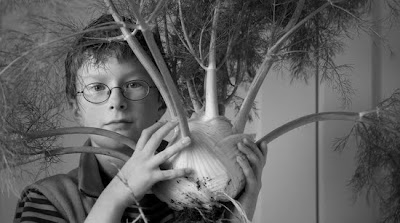
Well, as the fennel was flowering and threatening to seed out (never a good idea with this species, it tends to get invasive), we decided to tear the remaining plants out this week. I'm never a fan of throwing food out, so it was time to find some new stove-top fennel recipes!

I found a simple recipe on allrecipes.com that looked good, and it turned out great! The fennel is cooked in white wine and broth with a little honey and mustard. Here are the smaller bulbs (I cooked the large one as a separate meal) trimmed down and cleaned:

I followed the recipe pretty closely (I didn't have mustard seeds so I substituted ground mustard), and served it with spanish rice:

The result isn't particularly eye catching, but the tongue reacts differently! I would highly recommend fennel as a super easy vegetable to grow, and a great alternative if you find yourself tiring of the same old green beans every night.
Before our oven broke down in the fall, someone had planted fennel in the front yard. This may have actually been a year or more ago - by last week, the largest plant had a base nearly the size of my head, and many new pups had sprouted up nearby. Unfortunately, since we don't have a functioning oven and had only ever baked them before, we were at a slight loss of how to process it in quantity: I think the last harvest in December got turned into a pasta dish:

Well, as the fennel was flowering and threatening to seed out (never a good idea with this species, it tends to get invasive), we decided to tear the remaining plants out this week. I'm never a fan of throwing food out, so it was time to find some new stove-top fennel recipes!

I found a simple recipe on allrecipes.com that looked good, and it turned out great! The fennel is cooked in white wine and broth with a little honey and mustard. Here are the smaller bulbs (I cooked the large one as a separate meal) trimmed down and cleaned:

I followed the recipe pretty closely (I didn't have mustard seeds so I substituted ground mustard), and served it with spanish rice:

The result isn't particularly eye catching, but the tongue reacts differently! I would highly recommend fennel as a super easy vegetable to grow, and a great alternative if you find yourself tiring of the same old green beans every night.
Wednesday, April 7, 2010
A salad we didn't plant
Well, this blog has been mostly dormant since its inception, but I've decided to make a stab at posting regularly. So here goes a quick entry to start things off, and I have some further posts in the pipes that will hopefully show up here soon as well.
My parents bought the house we currently live a few years ago. At the time, the soil was fairly degraded, and apart from a lawn in need a good dethatching and your usual smörgåsbord of overutilized shrubs and trees, the flora consisted primarily of invasive European grasses, annuals, and a particularly obnoxious species of sorrel (Oxalis pes-caprae). Since then, the yard has been divided into several zones marked by various phases of ecological warfare. Our eventual goal is to have a rain-fed, low-maintenance garden that supports native wildlife
[1] and produces food. Toward that goal, we have begun an aggressive but organic campaign of weed suppression and soil improvement. In the photo below you can see a stand of "green manure" in our side yard.

These plants, which include nitrogen-fixing fava beans (Vicia faba) and vetches (Vicia sp.), are then dug into the ground before setting seed, adding valuable organic matter to the soil. We then cover the soil in a thick layer of straw (foreground in picture), which helps suppress weeds until we are ready to landscape.[2]
Anyway, today I was scything[3] the patch of green manure in the photo above, and realized I was mowing a fair amount of miner's lettuce (Claytonia perfoliata) that was growing in the understory of the larger plants. My brother John had planted this California native from seed less than two years ago in a nearby bed, and it had spread prolifically.

Well, as the name implies, miner's lettuce happens to be one of the ~1000 California native plants that are edible. Without much trouble, I harvested enough plants from 3 square feet to make several salads over. For dinner we chopped up a portion of this, and added greens or flowers from four other weedy non-natives: Common chickweed (Stellaria media) tastes much like the Claytonia, Oxalis leaves add a tart zing, and borage (Borago officinalis) and nasturtium (Tropaeolum sp.) flowers add color:

All around a great crispy and refreshing salad, and all of it from naturalized plants!
----
[1] In our case, we live half a mile from the nearest extant native habitat, so local wildlife means mostly birds and microfauna such as insects.
[2] Since we are currently also beginning a renovation of the house, we are holding off installing much of our permanent landscaping, to avoid having transplants crushed by contractors.
[3] Yup, my mother owns a honest-to-goodness scythe. Not only is it the most efficient and quiet weed-mowing tool I've ever used, it is by far the most fun!!
My parents bought the house we currently live a few years ago. At the time, the soil was fairly degraded, and apart from a lawn in need a good dethatching and your usual smörgåsbord of overutilized shrubs and trees, the flora consisted primarily of invasive European grasses, annuals, and a particularly obnoxious species of sorrel (Oxalis pes-caprae). Since then, the yard has been divided into several zones marked by various phases of ecological warfare. Our eventual goal is to have a rain-fed, low-maintenance garden that supports native wildlife
[1] and produces food. Toward that goal, we have begun an aggressive but organic campaign of weed suppression and soil improvement. In the photo below you can see a stand of "green manure" in our side yard.

These plants, which include nitrogen-fixing fava beans (Vicia faba) and vetches (Vicia sp.), are then dug into the ground before setting seed, adding valuable organic matter to the soil. We then cover the soil in a thick layer of straw (foreground in picture), which helps suppress weeds until we are ready to landscape.[2]
Anyway, today I was scything[3] the patch of green manure in the photo above, and realized I was mowing a fair amount of miner's lettuce (Claytonia perfoliata) that was growing in the understory of the larger plants. My brother John had planted this California native from seed less than two years ago in a nearby bed, and it had spread prolifically.

Well, as the name implies, miner's lettuce happens to be one of the ~1000 California native plants that are edible. Without much trouble, I harvested enough plants from 3 square feet to make several salads over. For dinner we chopped up a portion of this, and added greens or flowers from four other weedy non-natives: Common chickweed (Stellaria media) tastes much like the Claytonia, Oxalis leaves add a tart zing, and borage (Borago officinalis) and nasturtium (Tropaeolum sp.) flowers add color:

All around a great crispy and refreshing salad, and all of it from naturalized plants!
----
[1] In our case, we live half a mile from the nearest extant native habitat, so local wildlife means mostly birds and microfauna such as insects.
[2] Since we are currently also beginning a renovation of the house, we are holding off installing much of our permanent landscaping, to avoid having transplants crushed by contractors.
[3] Yup, my mother owns a honest-to-goodness scythe. Not only is it the most efficient and quiet weed-mowing tool I've ever used, it is by far the most fun!!
Tuesday, October 20, 2009
Where the Wild Things Are
Where the Wild Things Are is a children's movie. If I had three tickets and 4 children aged 3, 5, 8 and 12, I would probably take the bookend kids.
TTWTA is a feature length dramatization of a 10 sentence long children's picture book in which a child by the name of Max gets sent to his room after "making mischief" in his wolf costume, only to find his room transformed into a wonderful world where he becomes king of some scary looking Wild Things. In the end of the book he gets lonely and returns home. Most of you have probably read the book, and if you haven't, you missed out.
 Little from the book was missing in the movie. It captured with startling candor the feelings of an imaginative child who feels ignored by the world, and the frustrations of trying to constructively interact with that world. At the same time, the film reveled in the joys of romping through the woods, sailing the high seas and making friends with Wild Things.
Most of the story, though, is a morality tale; the cast are the Wild Things and Max himself, Each one is an archetype of some behavior dysfunction, and each one exists so that our hero can observe the consequences of various social behavior. However, most of these dysfunctions aren't fully resolved. Rather, they are merely grappled with, played out long enough that somebody gets hurt but not long enough for the story to lead to real repentance or redemption. This underscores one of the frustrations of childhood - relationships are often just as complex as they are for adults, but you have far fewer tools with which to understand them. Why does that friend want to be alone? Does he not like me? What can I do about it? Starting a dirt clod fight sometimes helps... will it work here?
One of the wonderful things about this story is that each character longs deeply for community, for real and total co-acceptance. They yearn to be one of the gang, to be loved, to fall asleep in a giant pile of fur and feathers. Recognizing their own dysfunction, they wait for a true king, one who will save the world and fix the brokenness. Carol, the Wild Thing whose personality most closely mirrors Max's own, has a real child-like mix of raw hope and a raw fear, a hope that lets him embrace Max as a king, and a fear that throws him into rage as that dream crumbles. If this were a story that had supported that hope and quenched that fear, it would be a great children's story. But its not.
In fact, Carol's hope is the only one that can be described as child-like. For most, the yearning for community is buried in layers of despair or, worse yet, cynicism. And this, unfortunately, is the viewpoint that is supported in the end. While there are flickers of forgiveness and love between individuals, there is no grand redemption, no salvation. WTWTA is, at its core, an atheistic movie. Max does not represent merely an unworthy, phony, or incapable king. He represents a fairy tale, a false hope. "There is no such thing as a king," Carol is told. No king and no salvation, no family head or higher good. Any hope of community and family is left a leaderless mess.
Did I enjoy the movie? Absolutely. If you want to explore the mind of children dealing with loneliness, social frustration and anger, you should see this movie too. But unless you want to introduce your kids to a morality that is, at best, functionalist ethics set in a dysfunctional world, hire a sitter. (Or better yet, take your kids and talk with them afterwards!)
3.5/5
TTWTA is a feature length dramatization of a 10 sentence long children's picture book in which a child by the name of Max gets sent to his room after "making mischief" in his wolf costume, only to find his room transformed into a wonderful world where he becomes king of some scary looking Wild Things. In the end of the book he gets lonely and returns home. Most of you have probably read the book, and if you haven't, you missed out.
 Little from the book was missing in the movie. It captured with startling candor the feelings of an imaginative child who feels ignored by the world, and the frustrations of trying to constructively interact with that world. At the same time, the film reveled in the joys of romping through the woods, sailing the high seas and making friends with Wild Things.
Most of the story, though, is a morality tale; the cast are the Wild Things and Max himself, Each one is an archetype of some behavior dysfunction, and each one exists so that our hero can observe the consequences of various social behavior. However, most of these dysfunctions aren't fully resolved. Rather, they are merely grappled with, played out long enough that somebody gets hurt but not long enough for the story to lead to real repentance or redemption. This underscores one of the frustrations of childhood - relationships are often just as complex as they are for adults, but you have far fewer tools with which to understand them. Why does that friend want to be alone? Does he not like me? What can I do about it? Starting a dirt clod fight sometimes helps... will it work here?
One of the wonderful things about this story is that each character longs deeply for community, for real and total co-acceptance. They yearn to be one of the gang, to be loved, to fall asleep in a giant pile of fur and feathers. Recognizing their own dysfunction, they wait for a true king, one who will save the world and fix the brokenness. Carol, the Wild Thing whose personality most closely mirrors Max's own, has a real child-like mix of raw hope and a raw fear, a hope that lets him embrace Max as a king, and a fear that throws him into rage as that dream crumbles. If this were a story that had supported that hope and quenched that fear, it would be a great children's story. But its not.
In fact, Carol's hope is the only one that can be described as child-like. For most, the yearning for community is buried in layers of despair or, worse yet, cynicism. And this, unfortunately, is the viewpoint that is supported in the end. While there are flickers of forgiveness and love between individuals, there is no grand redemption, no salvation. WTWTA is, at its core, an atheistic movie. Max does not represent merely an unworthy, phony, or incapable king. He represents a fairy tale, a false hope. "There is no such thing as a king," Carol is told. No king and no salvation, no family head or higher good. Any hope of community and family is left a leaderless mess.
Did I enjoy the movie? Absolutely. If you want to explore the mind of children dealing with loneliness, social frustration and anger, you should see this movie too. But unless you want to introduce your kids to a morality that is, at best, functionalist ethics set in a dysfunctional world, hire a sitter. (Or better yet, take your kids and talk with them afterwards!)
3.5/5
Sunday, December 21, 2008
Obama and Agriculture
Something doesn't seem right about Obama's choice for Secretary of Agriculture.
The presidential cabinet consists of the secretaries of departments of the Executive branch, people knowledgeable enough in their respective fields that they can offer their opinion and advice to the presidents "upon any Subject relating to the Duties of their respective Offices." (US Constitution) Obviously, the authority of any president far exceeds his expertise; to be a responsible leader, he must rely on trusted advisers who better understand the important workings of each system of government.
Obama, as you all know, has recently been picking his cabinet. Here are some of his selections, and their qualifications for the post:
Secretary of Energy: Steven Chu. Nobel Prize winning physicist, specializing in lazer cooling, atom trapping, and molecules in biological systems. Has organized research on energy related molecular work involving big names such as British Petrolium, and is actively involved in global climate councils.
Secretary of Veterans Affairs: Eric Shinseki. Vietnam war veteran with a maimed foot, four star general. Made some early unpopular predictions on Iraq war troop needs, and was proven right.
Secretary of the Treasury: Timothy Geithner. President of the Federal Reserve Bank of NY. Vice chairman of the Federal Open Market Commitee.
Now I'm not saying that I can guarantee the ability of these people to act as good advisors to the President of the United States, but each of them has a combination of leadership abilities and experience in their field that at least makes them look qualified. These people probably know something about where their field has come from, what the challenges facing it now are, and where it might go in the future.
These are the kinds of qualifications I expected Obama to look for in a Secretary of Agriculture nominee as well. I have to say I was even a little hopeful, thinking that perhaps Obama's call for "Change" would show itself in his choosing someone who would turn over a new leaf in the field of Agriculture, as it were. Here are a few major shifts in American agriculture that I've been hoping for:
Anyway, I've been looking forward to a regime change, not because I expected a new Secretary of Agriculture would necessarily bring about all of these changes, but because I hoped he might. Now, I'm pretty sure nothing will change, at least for the good.
Here's our guy:
Seriously, why is nobody questioning this guy's qualifications? Granted, he doesn't get the office unless the Senate approves him, but going on their previous record (our current Secretary has similarly little agricultural background), I'm not holding my breath.
Okay, the little conspiracy theorist inside of me has something to say:
"Vilsack isn't the only unqualified ex-presidential candidate to get assigned a post on Obama's cabinet. What about Clinton? She's unqualified for her position too! I bet they both had some dirt on Obama, or got bribed out of the race, or something. Obama obviously was obligated to appoint them. Something's fishy here."
Now, the theorist is probably just paranoid, but ya gotta wonder...
The presidential cabinet consists of the secretaries of departments of the Executive branch, people knowledgeable enough in their respective fields that they can offer their opinion and advice to the presidents "upon any Subject relating to the Duties of their respective Offices." (US Constitution) Obviously, the authority of any president far exceeds his expertise; to be a responsible leader, he must rely on trusted advisers who better understand the important workings of each system of government.
Obama, as you all know, has recently been picking his cabinet. Here are some of his selections, and their qualifications for the post:
Secretary of Energy: Steven Chu. Nobel Prize winning physicist, specializing in lazer cooling, atom trapping, and molecules in biological systems. Has organized research on energy related molecular work involving big names such as British Petrolium, and is actively involved in global climate councils.
Secretary of Veterans Affairs: Eric Shinseki. Vietnam war veteran with a maimed foot, four star general. Made some early unpopular predictions on Iraq war troop needs, and was proven right.
Secretary of the Treasury: Timothy Geithner. President of the Federal Reserve Bank of NY. Vice chairman of the Federal Open Market Commitee.
Now I'm not saying that I can guarantee the ability of these people to act as good advisors to the President of the United States, but each of them has a combination of leadership abilities and experience in their field that at least makes them look qualified. These people probably know something about where their field has come from, what the challenges facing it now are, and where it might go in the future.
These are the kinds of qualifications I expected Obama to look for in a Secretary of Agriculture nominee as well. I have to say I was even a little hopeful, thinking that perhaps Obama's call for "Change" would show itself in his choosing someone who would turn over a new leaf in the field of Agriculture, as it were. Here are a few major shifts in American agriculture that I've been hoping for:
- Elimination of farm subsidies. In trying to "support American farmers," the government has subsidised agriculture, essentially paying growers to produce food. Some of these subsidies are outright, others come in the form of tax reductions and extensive public infrastructure not found in many parts of the world. As a result, growers here can produce food for much less, meaning that food prices do not reflect food costs. Originally, these subsidies were put in place to protect the livelihoods of small farmers, who at the time of the first farm bill made up a large percentage of the beneficiaries. Now, the vast majority of the $8 billion spent each year goes to large scale growers (companies, not families). Worst of all, surplus production is then dumped overseas for prices that undercut foreign markets, destroying the ability of small farmers everywhere to survive.
- Encourage local on-farm recycling of animal waste. We have huge feed lots with mountains of rotting cow dung, while just miles away farmers spread chemical fertilizers onto their soil.
- Encourage consumption of locally grown food. (A complicated issue, I know, but important nonetheless)
- Give property tax benefits to farmers on prime agricultural land, savings that must be repayed in full if the land is converted to housing or commercial development. Good soil is a precious commodity, covering it over with concrete because local housing prices are high is a crime.
- Create a sustainable agriculture standard similar to the existent one for organic agriculture.
Anyway, I've been looking forward to a regime change, not because I expected a new Secretary of Agriculture would necessarily bring about all of these changes, but because I hoped he might. Now, I'm pretty sure nothing will change, at least for the good.
Here's our guy:
Name: Tom Vilsack

- Current position: Governor of Iowa
- Qualifications: None, at least as far as experience in, uh, agriculture goes. He once was involved in a passing a bill in Iowa that kept communities from banning GM foods. (that's a bad thing, imho). Oh, and he flies around in Monsanto owned jets a lot. I guess both of those are kind of related to agriculture.
- Obama's justification for appointing him: "Obviously, if you don't know agriculture, you're not going to become governor of Iowa"
Seriously, why is nobody questioning this guy's qualifications? Granted, he doesn't get the office unless the Senate approves him, but going on their previous record (our current Secretary has similarly little agricultural background), I'm not holding my breath.
Okay, the little conspiracy theorist inside of me has something to say:
"Vilsack isn't the only unqualified ex-presidential candidate to get assigned a post on Obama's cabinet. What about Clinton? She's unqualified for her position too! I bet they both had some dirt on Obama, or got bribed out of the race, or something. Obama obviously was obligated to appoint them. Something's fishy here."
Now, the theorist is probably just paranoid, but ya gotta wonder...
Subscribe to:
Posts (Atom)